
Lead Water Line Replacement Services

If you own a home built before the 1980s anywhere in Chicago or the Northwest suburbs, there’s a real chance a lead pipe is still connecting your house to the city water main. That single pipe, often relatively narrow, can be the biggest hidden health risk in an otherwise well-maintained home.
Below, we cover what a lead water line actually is, how to tell if you have one, why replacing it matters, and what to expect from a professional lead water line replacement project from start to finish.
Chicago has one of the highest concentrations of lead water lines of any city in the country, which comes from a legacy of plumbing codes that required a lead pipe for water service into the 20th century. The good news: replacing a lead water line is a well-understood process, and modern materials make it a permanent fix rather than a recurring repair.
What Is A Lead Water Service Line?
A water service line or water line is the pipe underground that connects your home’s plumbing to the municipality’s water main, delivering drinking water directly into the house. In many older homes throughout Chicago and the surrounding suburbs, the pipe was originally installed using lead.
Lead was previously chosen for water service lines because the material was inexpensive, easy to bend around obstacles, and resistant to corrosion from the outside. Unfortunately, lead has a serious downside: it can leach into the water supply, especially when water sits in the pipe for extended periods or when the water chemistry shifts.
Where The Lead Line Typically Runs
The water service line typically runs from the water main, under the driveway or front yard, through the foundation wall, and up to the water meter or shutoff valve inside the home.
Because most of this pipe is buried, homeowners often don’t know what material it’s made of until a plumber inspects it or the local water utility provides service line inventory records.
Lead Pipe Vs. Other Older Materials
Older homes may also have galvanized steel or even early copper service lines. Galvanized steel doesn’t leach lead directly, but it was often connected to lead pipe or used lead-based solder, and it corrodes internally over time, leading to reduced water flow and rust-colored water.
A licensed plumber can usually identify the pipe material with a simple visual inspection or a magnet test, which is a good first step before any water line repair services are scheduled.
How Do I Know What Material My Water Line Is Made Of?
A plumber can tell within minutes by scratching the pipe’s surface (a lead pipe is soft and shows a silver scratch) or testing it with a magnet (lead and copper aren’t magnetic, while galvanized steel is). Many municipalities also maintain inventories that homeowners can check.

Signs Your Home May Have A Lead Water Line
Age Of The Home
Homes built before 1986 are the most likely candidates, since federal law didn’t ban lead pipe for new water service connections until that year. In many Chicago neighborhoods and older Northwest suburb subdivisions, homes built before 1950 commonly used lead for the water line, since it was the plumbing code standard at the time.
Visual Clues Inside The Home
Pipe Color & Texture:
Lead pipe is dull gray and feels soft. A gentle scratch with a coin or key will reveal a shiny, silver-colored surface underneath.
Non-Magnetic Material:
A refrigerator magnet won’t stick to a lead or copper pipe, but it will stick to galvanized steel.
Curved, Unsoldered Joints:
Lead pipe is often bulbous where it connects to fittings, since it was worked and shaped by hand rather than soldered like copper.
Water Quality Symptoms
- Water that occasionally looks cloudy, metallic-tasting, or slightly discolored, especially first thing in the morning after water has sat in the pipes overnight.
- A noticeable drop in water pressure that’s traced back to the water service line rather than interior plumbing.
- Results from a home water test showing elevated lead levels, particularly in water drawn from a tap that hasn’t run in several hours.
Health Risks Associated With Lead Plumbing
Why Is Lead In Water Dangerous?
Unlike many contaminants, there is no known safe level of lead exposure. Lead can leach into water as it sits in contact with lead pipe, particularly when the water is more acidic, when pipes haven’t been used recently, or when nearby construction disturbs the pipe and dislodges lead particles into the water stream.
Long-Term Health Effects From Lead Exposure
Chronic lead exposure has been linked to developmental delays and learning difficulties in children, as well as high blood pressure, kidney problems, and reproductive issues in adults.
Because symptoms of low-level lead exposure are often subtle or absent, many people don’t realize there’s a problem until bloodwork picks it up. This is part of why proactive lead pipe replacement, rather than waiting for a visible problem, is the approach generally recommended by public health officials.


The Real Benefits Of Replacing A Lead Water Line
Replacing a lead water line is one of those home improvement projects that doesn’t add visible curb appeal, but it delivers real, lasting value in a few important ways:
Health & Safety
The most obvious benefit of lead water line replacement services is the elimination of an ongoing lead exposure risk for everyone in the household. Unlike filters, which need regular maintenance and replacement cartridges, a new line removes contamination permanently.
Improved Water Pressure & Flow
Lead and old galvanized pipe often narrow over time due to mineral buildup and corrosion. Homeowners frequently notice better, more consistent water pressure after a full service line replacement, especially in homes where pressure has been gradually declining for years.
Long-Term Cost Savings
While water line replacement has an upfront cost, it eliminates the need for repeated repairs on aging, brittle pipe. Older lead lines are also more prone to leaks and breaks, particularly during Chicago’s freeze-thaw winters, which can require an emergency plumber and water damage repairs that add up.
Increased Home Value & Marketability
Lead water service line disclosure and inventory requirements are becoming more common in Illinois, and homes with documented lead-free water lines are becoming more attractive to buyers, particularly families with young children. A replaced line can be a genuine selling point.
What To Expect From A Professional Lead Water Line Replacement, Step By Step
Step 1: Inspection & Assessment
A licensed plumber will verify the service line material, check the pipe condition, and determine the exact route from the water main to the home. This step often includes locating the curb stop (shutoff valve typically near property line) and identifying any obstacles like trees, driveways, or hardscaping along the pipe’s path.
Step 2: Permitting & Utility Coordination
Because the water service line connects to the public water main, most Chicago municipalities require a permit before work begins, and the water utility is typically notified so the connection at the main can be made safely. Andersen Plumbing handles this coordination directly so homeowners don’t have to navigate municipal paperwork.
Step 3: Excavation
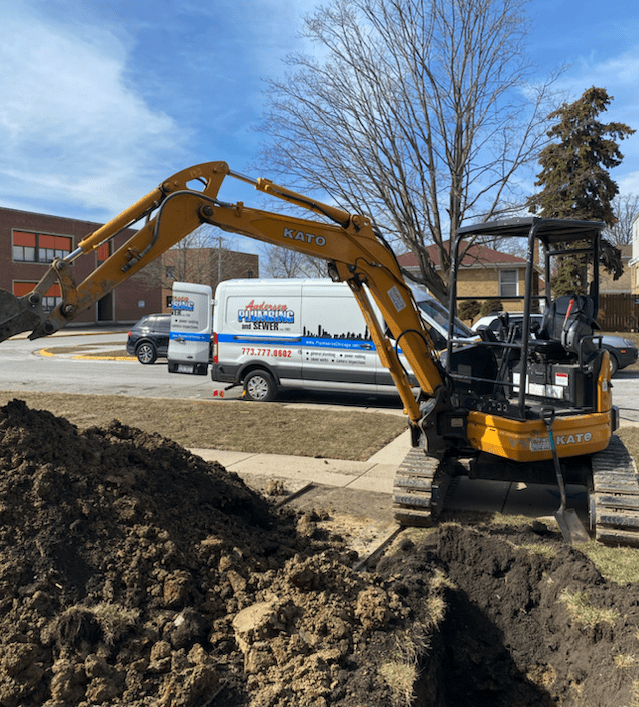
Depending on the property and local requirements, the old line is exposed using either traditional trench excavation or trenchless methods that minimize disruption to the yard. The approach depends on factors like pipe depth, soil conditions, and what’s located above the pipe’s path, such as landscaping, sidewalks, or driveways.
Step 4: Pipe Replacement
The old lead pipe is disconnected and removed, and a new line, typically copper or approved plastic piping, is installed from the main to the home’s interior shutoff valve. Connections are made at both ends, and the new line is pressure-tested to confirm there are no leaks before it’s put into service.
Step 5: Restoration & Final Inspection
Once the new line is confirmed to be working properly, the trench is backfilled and the surface area is restored as closely as possible to its original condition. A final inspection, often required by the municipality, confirms the work meets code before the project is considered complete.
Repair Or Replacement? How To Know Which Option Your Lead Line Actually Needs
Not every plumbing issue involving a lead line requires a full replacement right away, but it’s worth understanding the difference so you can make an informed decision:
When A Repair Might Be Considered
A temporary or partial repair, such as patching a small leak, may buy time in specific situations, like when a homeowner needs to plan a full replacement around budget or scheduling. However, repairs don’t address the underlying lead exposure risk, and lead pipe becomes more brittle and failure-prone with every passing year.
Why Replacement Is Usually A Better Long-Term Choice
A repair only fixes the immediate issue, but the rest of the pipe still contains lead and can leach into the water supply. Additionally, lead pipe that’s already showing signs of failure in one section is likely to develop problems elsewhere soon. Lastly, repairs may not satisfy upcoming compliance deadlines, as many municipalities require replacement.
How To Decide
The right call often depends on the pipe’s condition, your municipality’s timeline for mandatory lead line replacement, and your household’s specific health considerations. A straightforward water line and pipe repair evaluation from a licensed plumber can help clarify which option makes the most sense for your property.
Materials Used For Modern, Lead-Free Water Service Lines
Copper Piping
Copper has long been a preferred material for water service lines due to its strength, corrosion resistance, and long service life, often 50 years or more with proper installation. It’s a widely trusted option throughout Chicagoland and is frequently the material of choice for homeowners who want a proven, time-tested solution.
Approved Plastic Piping (PEX & HDPE)
Cross-linked polyethylene (PEX) and high-density polyethylene (HDPE) are increasingly common for service line replacement. These materials are flexible, resistant to corrosion, and can often be installed with less excavation than rigid copper pipe, which can reduce disruption to your yard.
Which Material Is Best For A Lead-Free Water Line?
The best material depends on factors like local plumbing code requirements, the layout and length of the service line, soil conditions, and budget. A licensed plumber can walk through the tradeoffs for your specific property and recommend the option that best balances longevity, cost, and installation impact.


Why Professional Installation Matters For Lead Water Line Replacement
Licensing & Code Compliance
Water service lines connect directly to the public water supply, so the work has to meet municipal code, often requiring permits and utility coordination. A licensed, insured plumbing contractor understands the requirements across different Chicago municipalities and suburbs, which can vary town to town.
Proper Connection At The Water Main
An improperly made connection at the water main can lead to leaks, water loss, or contamination risks. Professional installers use the correct fitting techniques to ensure a secure, long-lasting connection at both the main and the home.
Long-Term Reliability
A rushed or improperly installed line can lead to future leaks, reduced water pressure, or premature pipe failure, essentially recreating the same problems the replacement was meant to solve. Working with an experienced team like ours helps ensure the new line performs reliably for decades.
Frequently Asked Questions About Lead Water Line Replacement
How Do I Find Out If My Home Has A Lead Service Line?
How Much Do Lead Water Line Replacement Services Typically Cost?
Will I Have Water Service During The Replacement?
Do I Need A Permit To Replace My Water Service Line?
What Happens If I Only Replace The Portion Of The Line On My Property?
Ready To Replace Your Lead Water Line?
If you are a homeowner in Chicago or the Northwest suburbs and you suspect your home may still have a lead water line, don’t wait for a bigger problem to force the issue. Andersen Plumbing & Sewer Services has been a trusted, licensed plumbing contractor in the Chicago area since 1980.
Our team can inspect your service line, walk you through your options, and handle the entire replacement process from permitting to final restoration. To schedule an inspection or learn more about how our lead water line replacement services can help protect your home’s water quality for years to come, Contact Us Here Today!